

The bigger the grocery store, the more probable is to find food packed in styrofoam. These packs are easy to grab in crowded situations. They are used for veggies, meat, fish…They often pack only the readily consumable part, for instance, a fillet of fish. There are so many reasons to choose not to buy whole fish: It has to be cleaned, the scales taken off, the guts removed from the belly, the gills taken off, the bones removed. Why would anyone want to do any of these? In the styrofoam pack, everything has already been done, all there is to do is take out the fillet and cook it.
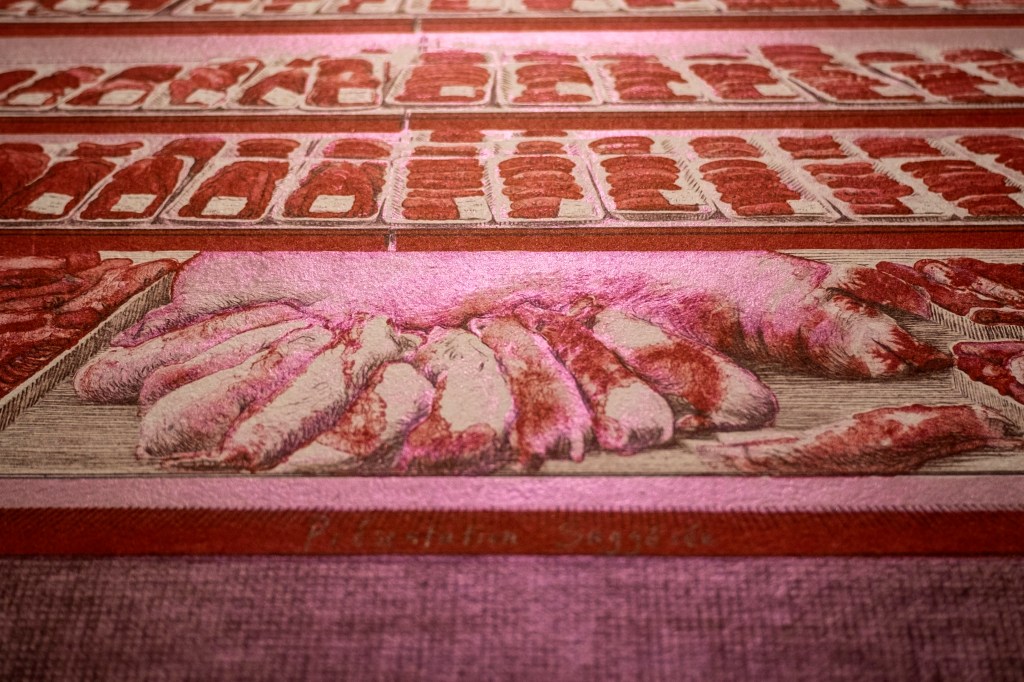
I am always curious as to where the fillets come from; What did that fish looked like? What was its face like? How did it move underwater? Where did it live? Perhaps there are others like me, wondering these things in front of the fish display at the grocery store, but we won’t start such a conversation, in front of the fridge. Eating anonymous fillets is normal. Imagine a styrofoam pack with a cartoon fish’s picture. What kid would eat Nemo? I recently saw a picture of a butcher’s window on social media. Amongst different meat
products in the display, the butcher had installed a sow with her dead piglets placed in suckling position. On the internet, some people commented on the perversity of the butcher. I wonder which gesture is the perverse one: To buy nameless fillets, or to sell recognizable meat?
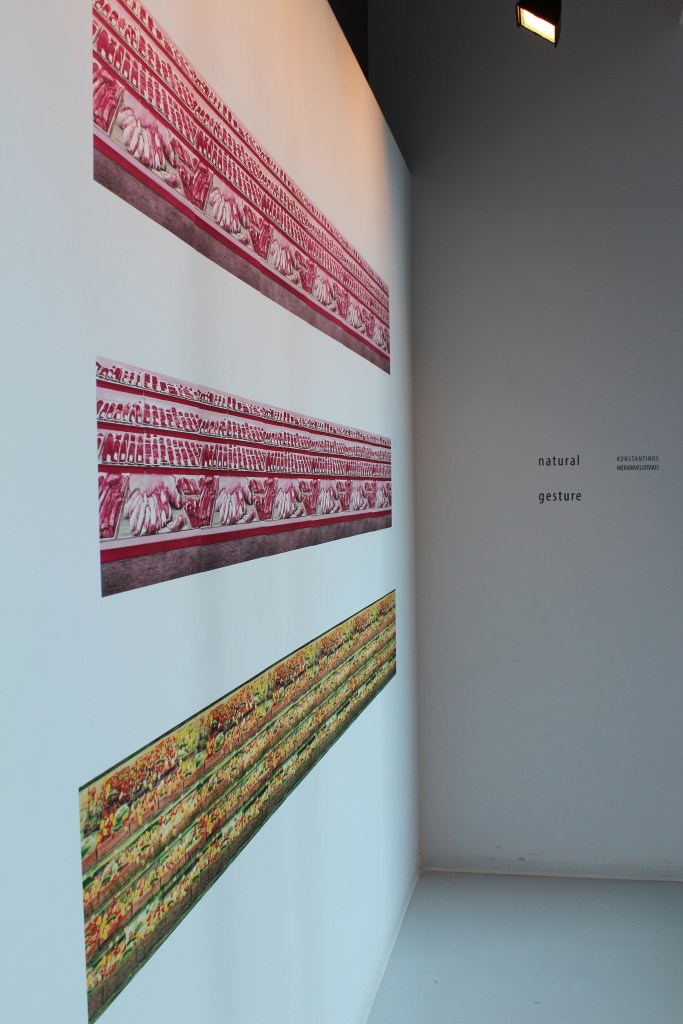
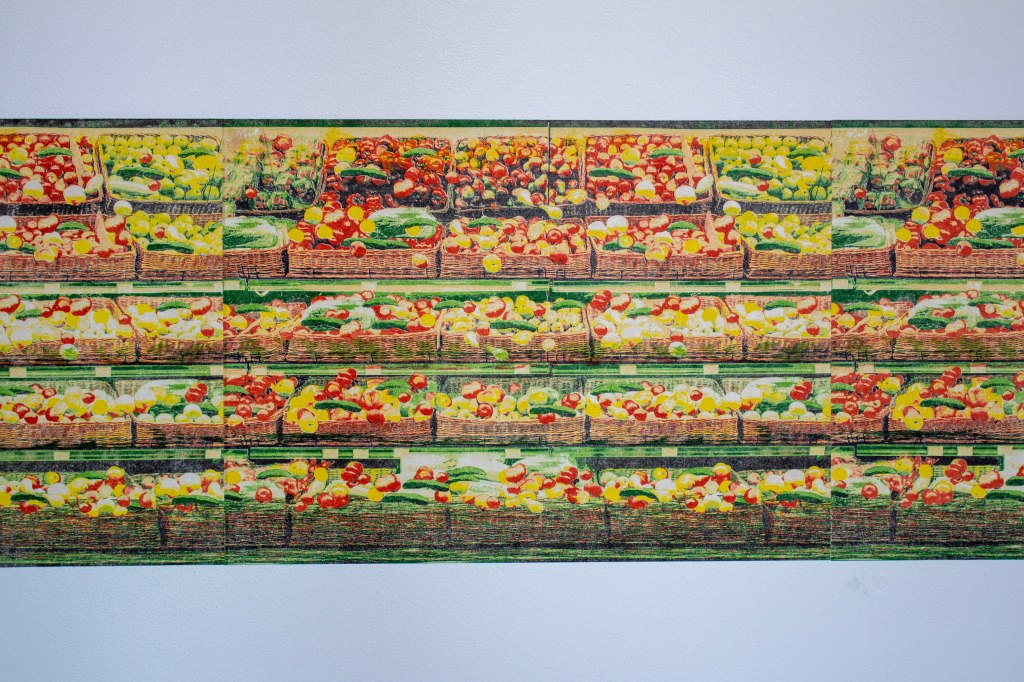
“Serving suggestion” is a print installation composed of two editions of lithographs. One edition shows a supermarket meat display, and the other edition shows a supermarket vegetable display. It measures 84 inches by 55 inches, and it is printed on Japanese paper which is wheat-pasted on the wall.
 Konstantinos Meramveliotakis